Look before exaggerating
Learning to Draw Caricatures: What Should You Exaggerate?
Why a larger nose is not always enough, what face-recognition experiments can explain, and how to compare drawing choices, with Muli Asido's perspective.
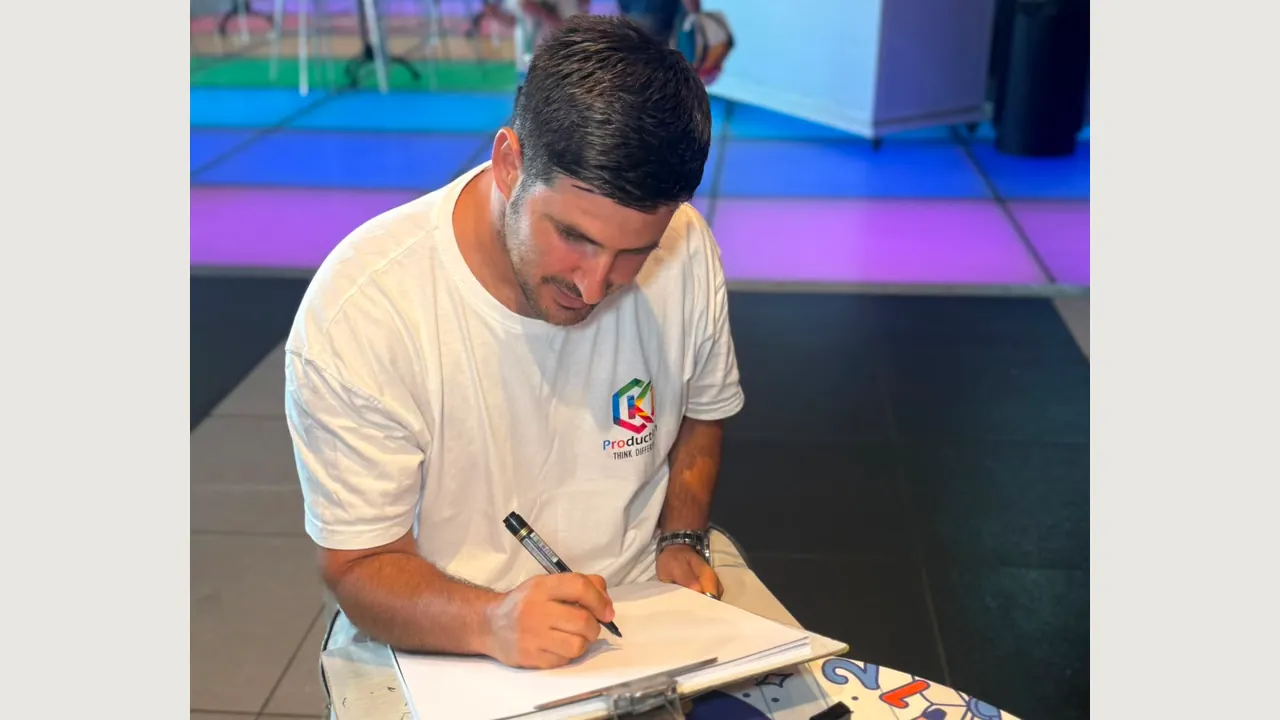
A photograph from the Metsuyarim library, showing drawing at an event.
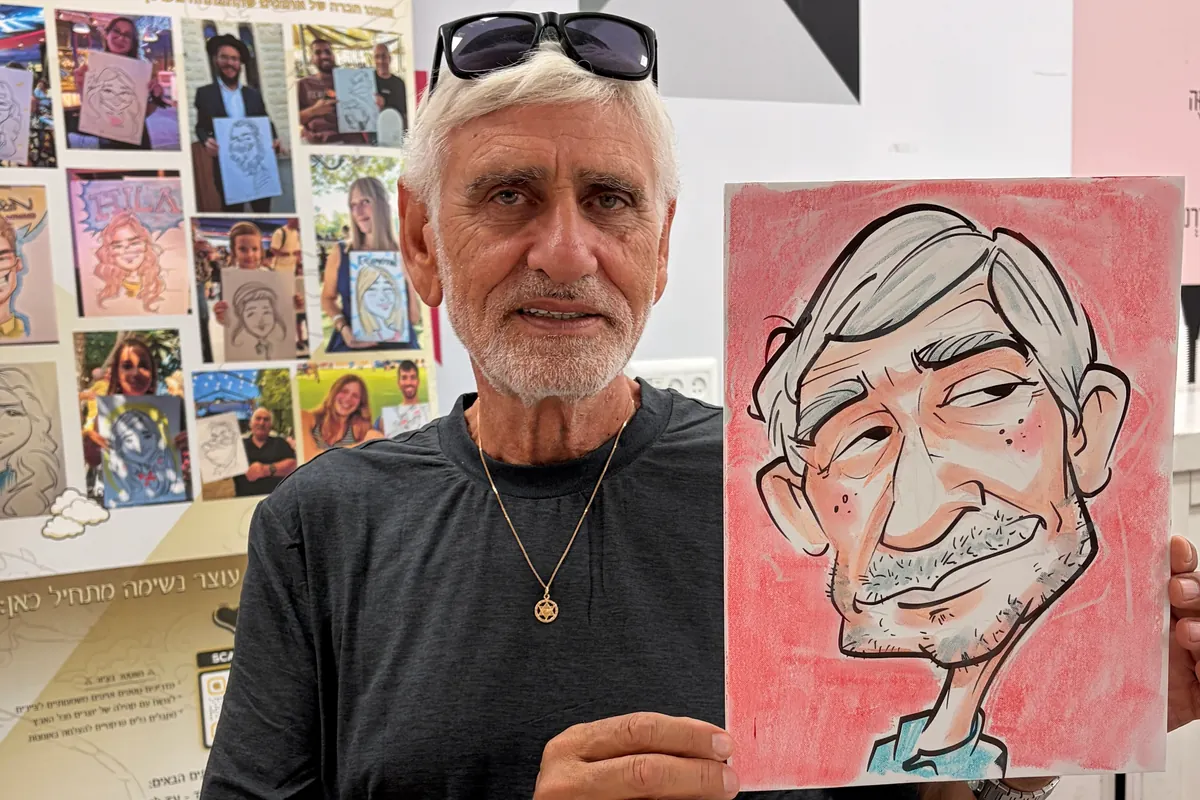
A larger nose does not automatically make a drawing look more like its subject. Choosing what to exaggerate involves the features that distinguish a face and the relationships between them: head shape, hairline, smile and the space each occupies.
Muli Asido describes art as learning to see. That offers a useful starting point for caricature too: spend time observing, choose something to test, then work out what your choice did to the drawing. We will start with what distinguishes a face, then consider a simple way to compare choices on paper.
Why might emphasising a feature help us recognise a face?
In experiments published by Robert Mauro and Michael Kubovy, caricatures that emphasised distinctive facial features showed a recognition advantage. They examined an explanation involving how those features are represented in memory. The experiments tested recognition of face stimuli under controlled conditions. They do not establish that every exaggeration improves every drawing, or validate the exercise below. 1
For someone drawing, this suggests a practical question: which relationships in this particular face are worth keeping and emphasising? A nose, pair of glasses or hairstyle may catch your eye, but consider how it relates to the whole shape. You are looking for a choice you can explain and compare.
How do you choose something to test on paper?
Start with a clear photograph you have permission to use. Before drawing, write one observation, such as: the hair makes the top of the head feel wider, or the smile is narrow in relation to the cheeks. A small observation is enough. It gives you a defined idea to explore.
Muli's teaching approach returns to breaking a problem into parts that can be practised. Rather than trying to solve likeness, expression, colour and line together, choose one decision. That makes it easier to understand what changed the result, even when the sketch does not yet look as you intended.
A comparison exercise: one photograph, three sketches
This is a proposed practical exercise for your own comparison. Keep the photograph and angle the same, and simplify the drawing so that the decisions are easy to compare.
- Draw an initial sketch of the head shape and feature positions as a starting point.
- In the next sketch, emphasise your chosen feature slightly. Keep the other relationships close to the first version.
- In the third, try a different degree of emphasis on the same feature, either stronger or gentler.
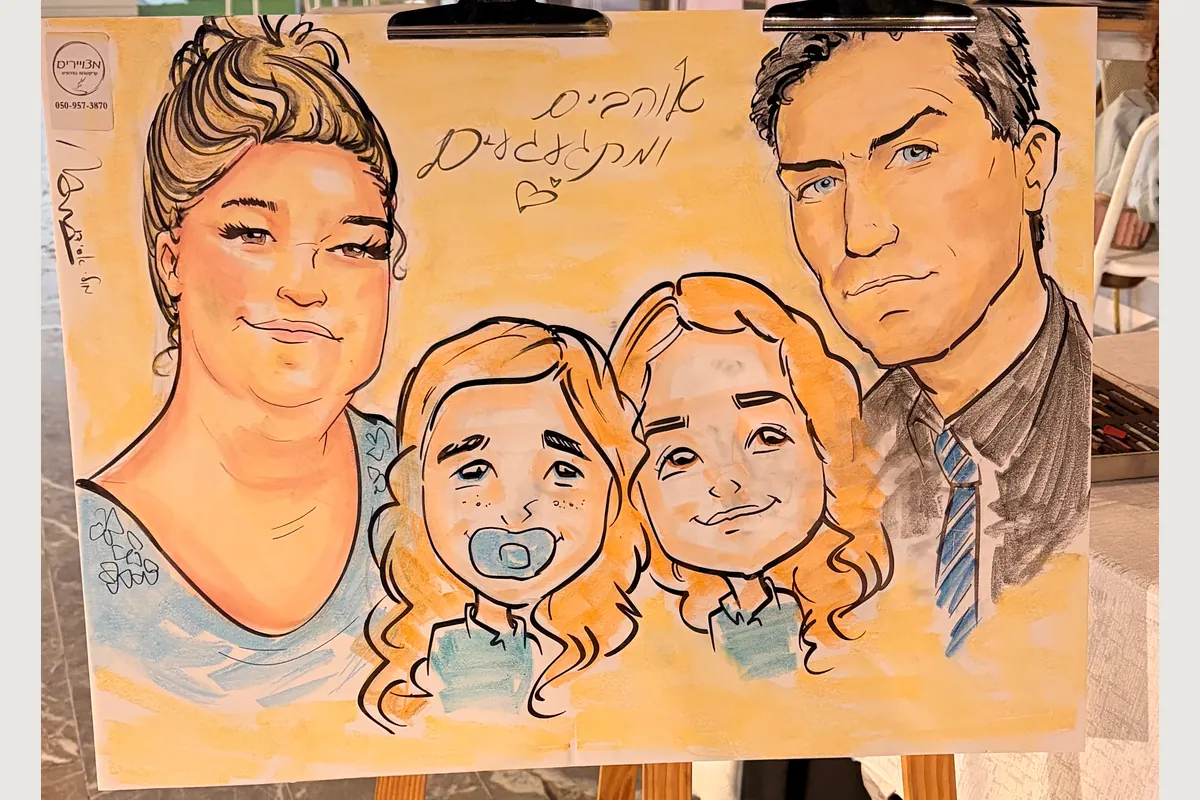
Place the sketches beside one another and consider which retains the likeness. If a version has moved away from the person, identify the decision that caused it. Return to an earlier sketch and adjust that choice alone. The comparison matters more here than completing an impressive drawing.
What can you do with ten minutes a day?
Muli suggests setting aside ten minutes with your morning coffee, or ten minutes with headphones in the evening. Use the time for one observation and one sketch. The following day, return to it and compare, without setting yourself a large new task each time.
Research by Phillippa Lally and colleagues gives context for repetition in a consistent setting. Participants repeated a daily behaviour in the same context, and automaticity developed gradually at different rates. The behaviours involved eating, drinking and physical activity, not drawing. Ten minutes is Muli's suggestion; the study adds context for a regular routine without prescribing how long to draw. 2
How can you tell whether the practice is helping?
Look for a decision becoming clearer: choosing a feature, explaining why you exaggerated it, or understanding why a version lost the likeness. Keep short notes beside the sketches. They give you something more specific to revisit than whether you feel a drawing turned out well.
Muli writes that teaching should develop independence. In this setting, useful practice leaves you with a question you can investigate yourself. If you are returning after a long break, the journal also has an article about returning to drawing after years away.
Sources and further reading
Further reading and questions
Explore Caricature in a MinuteContinue the conversation
What in this article connects with your own practice? Share a question, a thought, or something you have learned.
Loading the conversation…